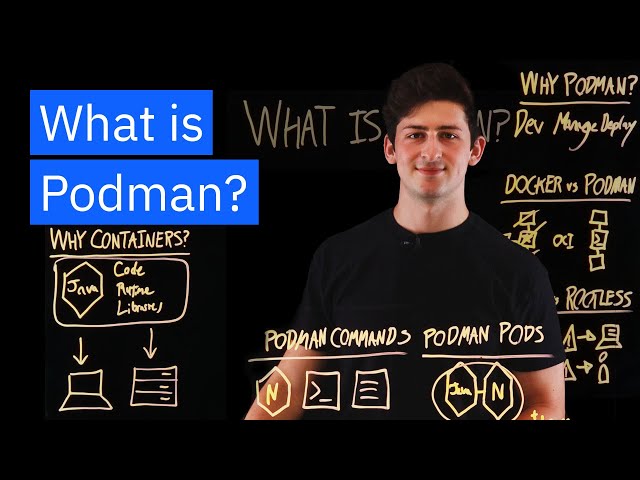
In the landscape of containerization, Docker has become synonymous with container management. However, Podman is emerging as a compelling alternative that offers unique features and advantages. In this post, we will explore what Podman is, how it works, and why it might be the right choice for your container management needs.
What is Podman?
Podman is an open-source container engine that allows developers to create, manage, and run containers. It is built on the same Open Container Initiative (OCI) standards as Docker, ensuring compatibility and ease of use for those familiar with Docker commands. Podman addresses some of the limitations of Docker by emphasizing security and efficiency.
Key Features of Podman
- Daemon-less Architecture:
- Unlike Docker, which operates using a client-server architecture with a background daemon (the Docker engine) running as root, Podman employs a daemon-less approach. This means that each command executed through Podman runs as a separate process, enhancing security and reducing the risk of a single point of failure.
- Rootless Containers:
- Podman allows users to run containers as non-root users by default. This mitigates security risks associated with running applications as root, ensuring that even if a vulnerability is exploited, the impact is limited to the user level rather than compromising the entire system.
- Pod Support:
- Similar to Kubernetes pods, Podman supports the concept of pods—groups of one or more containers that share networking and storage resources. This feature simplifies the management of multi-container applications and enhances communication between containers.
Getting Started with Podman
To illustrate how Podman works, here are some basic commands that users can employ:
Pulling an Image: To download an image from a registry (e.g., Nginx),
podman pull nginx
Running a Container: To run a container based on the pulled image
podman run -d nginx
Listing Active Containers: To see all running containers
podman ps
These commands are similar to their Docker counterparts, making it easy for existing Docker users to transition to Podman.
Why Choose Podman?
Podman’s architecture makes it particularly appealing for developers focused on security and efficiency. The ability to run containers without requiring a persistent daemon process reduces overhead and potential vulnerabilities. Additionally, its integration with Kubernetes makes it an excellent tool for those looking to develop and deploy applications in cloud-native environments.
How does Podman’s daemon-less approach improve efficiency?
1. Elimination of a Central Daemon
Unlike Docker, which relies on a central daemon to manage containers, Podman operates without this intermediary. Each command executed in Podman runs as a separate process, which means that there is no single point of failure. This design minimizes complications and potential vulnerabilities that can arise from a long-running background service, ultimately leading to improved stability and performance14.
2. Resource Efficiency
By not requiring a persistent daemon, Podman reduces resource consumption. This is particularly beneficial in environments with limited resources or strict security requirements, as it allows for more efficient use of system resources. The absence of a daemon means that Podman can operate with lower overhead, freeing up CPU and memory for other tasks135.
3. Direct Interaction with the Kernel
Podman communicates directly with the container runtime (like runc), allowing it to manage containers without the additional layer of a daemon. This direct interaction streamlines operations and can lead to faster execution times for container lifecycle commands such as starting, stopping, and managing containers23.
4. Enhanced Security
The daemon-less approach also contributes to security improvements, as it allows users to run containers without elevated privileges (rootless). This reduces the risk of privilege escalation attacks since containers do not run with root access by default. By minimizing the attack surface associated with root privileges and a central daemon, Podman enhances the overall security posture of the container environment245.
5. Simplified Management
Without a central daemon, managing containers becomes more straightforward. Users can execute commands directly from the command line without needing to interact with an intermediary service. This direct approach simplifies workflows and can make it easier for developers to manage their containers in various environments
Leave a Reply