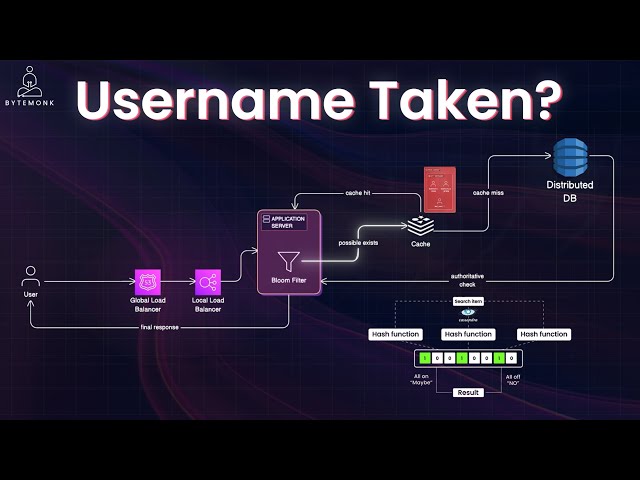
In today’s digital age, the process of checking username availability is instantaneous, thanks to sophisticated systems employed by tech giants. This blog post delves into the mechanisms that enable platforms to verify usernames swiftly and efficiently.
The Challenge of Instant Username Verification
When users sign up on platforms like Facebook, Google, or Twitter, they expect immediate feedback on username availability. Achieving this requires systems that can handle millions of requests per second without compromising performance.
Key Technologies and Strategies
- Distributed Databases: Utilizing distributed databases allows for horizontal scaling, ensuring that username checks can be handled across multiple servers simultaneously.
- Caching Mechanisms: Implementing caching layers, such as Redis or Memcached, stores frequently accessed data in memory, reducing the need for repeated database queries.
- Load Balancing: Distributing incoming requests evenly across servers prevents any single server from becoming a bottleneck.
- Asynchronous Processing: Employing asynchronous operations ensures that the system remains responsive, even under heavy load.
- Optimized Algorithms: Using efficient algorithms for string matching and validation accelerates the verification process.
Ensuring Data Consistency and Integrity
While speed is crucial, maintaining data consistency is equally important. Tech companies implement mechanisms like:
- Atomic Operations: Ensuring that username assignments are atomic prevents race conditions where two users might be assigned the same username.
- Replication and Redundancy: Data is replicated across multiple servers to prevent loss and ensure high availability.
Conclusion
The instantaneous feedback users receive when checking username availability is the result of complex, well-orchestrated systems. By leveraging distributed architectures, caching, load balancing, and optimized algorithms, tech giants ensure a seamless user experience.
Leave a Reply