Understanding API Communication for Modern Developers
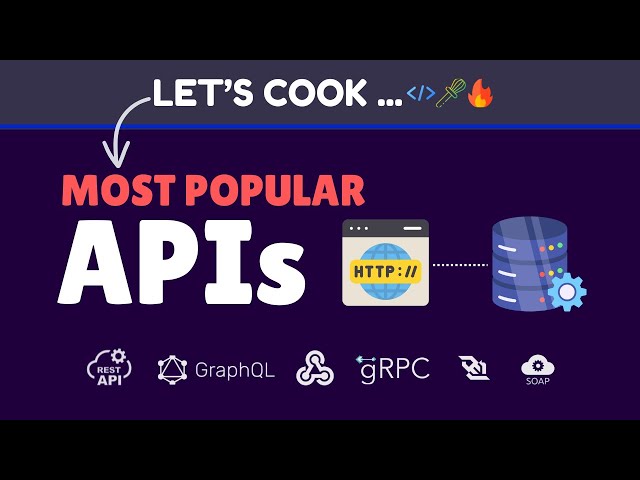
APIs (Application Programming Interfaces) are the backbone of the modern internet — enabling apps, servers, and services to talk to each other. But not all APIs communicate the same way. The YouTube video “Every Popular API Style Explained… Like You’re 5” breaks down the most widely used API communication styles in an intuitive, beginner-friendly manner, helping developers and learners easily grasp what each one does and when to use it.Whether you’re a budding software engineer or a product manager trying to understand backend concepts, this explanation helps demystify complex terms like REST, GraphQL, gRPC, WebSockets, and more.
API Communication Styles Covered in the Video
1. REST (Representational State Transfer)
REST is the most traditional and widely adopted API style on the web. It uses simple HTTP methods — GET, POST, PUT, DELETE — to interact with resources (like users, posts, products).
- Why it’s popular:
- Easy to understand
- Works with standard HTTP
- Stateless (each request is independent)
- Use cases:
- Web and mobile backend services
- Public APIs like those from Twitter, GitHub, and Google
REST’s simplicity and ubiquity make it a go-to option for many developers.
2. SOAP (Simple Object Access Protocol)
SOAP is an older protocol that uses XML to send messages over networks. It’s more rigid and formal than REST.
- Key characteristics:
- Uses strict XML envelopes
- Built-in error handling
- Requires a standard interface description (WSDL)
- Use cases:
- Enterprise systems
- Financial services and legacy applications
Although less popular in modern web startups, SOAP remains relevant in industries where strict contracts and formal standards are critical.
3. GraphQL
GraphQL changes the way clients fetch data. Instead of multiple endpoints for different resources (as in REST), GraphQL offers a single endpoint that lets clients request exactly the data they need.
- Benefits:
- Reduces over-fetching and under-fetching
- Enables flexible queries
- Often paired with modern frontend frameworks
- Use cases:
- Complex apps needing tailored data views
- Mobile clients with bandwidth constraints
GraphQL’s ability to let clients shape responses is its biggest advantage.
4. gRPC
gRPC is a high-performance RPC (Remote Procedure Call) framework originally developed by Google. It uses Protocol Buffers (protobuf) for efficient serialization.
- Strengths:
- Fast binary communication
- Strong contract definitions via
.protofiles - Bi-directional streaming support
- Use cases:
- Microservices with high throughput
- Real-time systems
Unlike REST, gRPC excels in backend-to-backend communication where performance matters most.
5. WebSockets
WebSockets enable persistent, bi-directional connections between clients and servers. Rather than request/response, WebSockets keep a live connection open.
- Advantages:
- Real-time data push
- Low-latency updates
- Use cases:
- Live chat
- Real-time dashboards
- Multiplayer games
WebSockets make real-time interactivity possible without constant polling.
6. Webhooks
Webhooks are “callbacks” triggered by events. Instead of polling an API to check for updates, systems can be configured to notify another service when something happens.
- Real-world example:
- A payment gateway sends a webhook to notify your server when a transaction completes
Webhooks reduce overhead and enable event-driven integration.
Why These API Styles Matter
Each style serves specific architectural and performance needs:
- REST for simplicity and broad adoption
- SOAP for formal enterprise environments
- GraphQL for efficient, flexible data queries
- gRPC for performance-sensitive microservices
- WebSockets for persistent real-time connections
- Webhooks for event-driven communication
Understanding these options empowers developers to choose the best tool for the job rather than defaulting to one familiar pattern.
Conclusion
API communication is foundational to modern software. This video simplifies diverse API styles, making them accessible even to beginners, while offering practical insights into how they work and when to use them. Whether you’re building backend services, integrating third-party platforms, or designing real-time applications, these API paradigms are essential knowledge in 2026 and beyond.
Leave a Reply