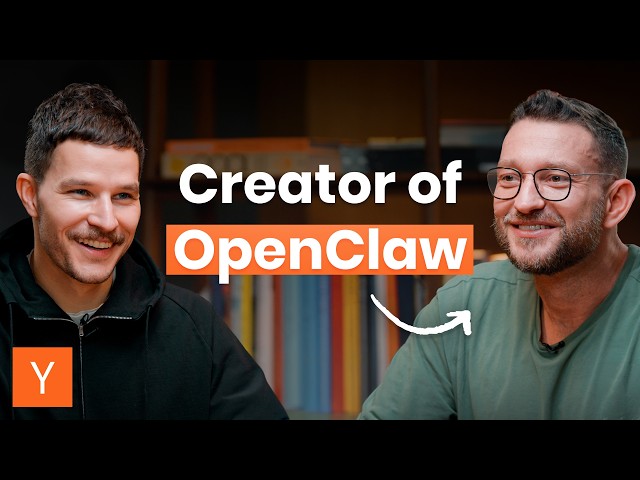
The way we use software is changing — fast. In this thought-provoking discussion, the creator of OpenClaw explains why most of the apps we rely on today may soon become irrelevant.
Yes, you read that right — up to 80% of apps could disappear.
But this isn’t just speculation. It’s a logical consequence of a massive shift toward AI agents that act on our behalf.
Let’s break down what this means, why it’s happening, and how it could reshape the future of software.
🤖 The Rise of Autonomous AI Agents
Traditionally, apps exist to help us perform specific tasks:
- Track fitness
- Manage to-do lists
- Organize notes
- Book travel
- Handle schedules
Each task = one app.
But AI agents are changing that model completely.
Instead of using separate apps, you can simply tell an intelligent agent what you want — and it will:
✔ Understand context
✔ Store and manage data
✔ Take actions automatically
✔ Learn from your habits
These agents can operate across your entire digital environment — devices, services, and data — acting like a personal operating system for your life.
📉 Why Most Apps May Become Obsolete
Many apps today exist mainly to store or manage user data.
Examples:
- Fitness tracking apps
- Reminder apps
- Budget planners
- Note-taking tools
But an AI agent can do all of this natively — without requiring separate software.
If your agent already knows:
- What you eat
- Your schedule
- Your goals
- Your preferences
Then it can automatically:
- Track habits
- Set reminders
- Adjust routines
- Suggest improvements
In this model, standalone apps become redundant because the agent handles everything directly.
🧠 A Shift From Apps to Intelligence
We are moving from a world of tools to a world of intelligent assistants.
Old model:
👉 Humans operate apps
New model:
👉 Agents operate systems for humans
This means software will become:
- More conversational
- More predictive
- More autonomous
- More integrated
Instead of switching between apps, users will interact with a single intelligent layer that coordinates everything.
⚡ What This Means for Developers
If this vision becomes reality, the software industry will undergo a structural transformation.
Possible changes:
1. Fewer standalone applications
Utility apps that only manage data may disappear first.
2. Rise of agent-first design
Developers will build services that AI agents interact with — not humans directly.
3. Platform-level intelligence
Operating systems may evolve into AI orchestration environments.
4. New security challenges
An agent controlling devices, services, and data introduces serious privacy and security concerns.
🔐 The Power–Risk Trade-Off
With great autonomy comes great responsibility.
AI agents that can control your computer, apps, and connected devices create enormous convenience — but also:
- Security risks
- Data ownership concerns
- Trust challenges
When a system can act independently, governance becomes critical.
This is one of the biggest open questions in the agent-driven future.
🌍 The Bigger Picture
The prediction that most apps will disappear isn’t really about apps.
It’s about interface evolution.
History shows a pattern:
Command line → Graphical UI → Mobile apps → AI agents
Each step removes friction and increases abstraction.
AI agents may be the next major computing paradigm — where software becomes invisible, and intelligence becomes the interface.
🚀 Final Thoughts
The idea that 80% of apps could vanish sounds extreme — but it reflects a deeper shift in how humans interact with technology.
We may soon move from:
Using software → Delegating to intelligence
If AI agents continue advancing at this pace, the future of computing won’t be defined by the number of apps you install…
…but by the capability of the agent that represents you.
Leave a Reply