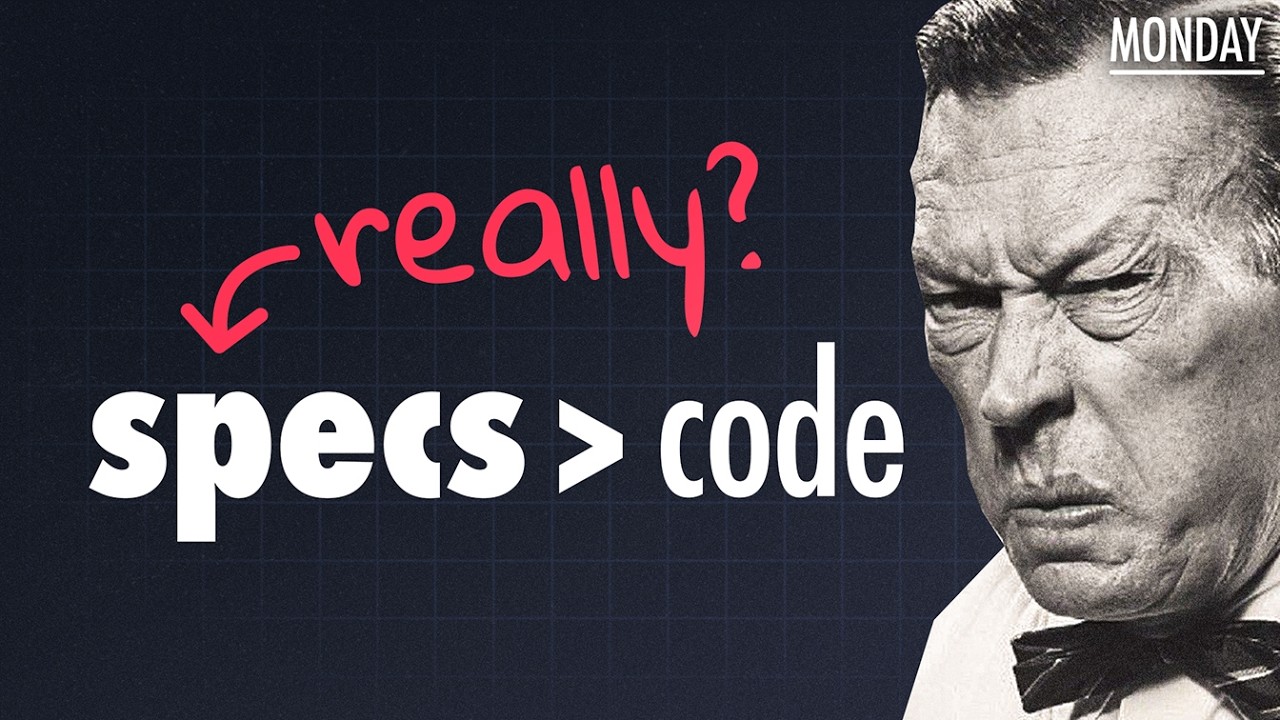
In the ever-evolving world of software development, a new methodology is taking center stage: Spec-Driven Development (SDD). While “Vibe coders” and product managers are celebrating, many seasoned engineers are left wondering if this is the final nail in the coffin for the joy of coding.
In a recent critique by the channel Awesome, the shift from manual coding to “digital babysitting” is explored in depth. Here’s a look at what SDD is, why it’s controversial, and the data behind the AI productivity hype.
What is Spec-Driven Development (SDD)?
At its core, SDD flips traditional development on its head. Instead of diving into code, you start by writing a precise, machine-readable document—a specification—that describes the “what,” “why,” and “how” of a feature. [01:31]
This spec becomes the living source of truth. Unlike traditional docs that gather dust, SDD specs are fed into AI agents to generate the actual implementation.
The Four Stages of GitHub Spec Kit:
Tools like GitHub Spec Kit are formalizing this workflow into four official stages:
- Specify: Defining user journeys and business requirements in extreme detail. [02:57]
- Plan: Defining the tech stack, dependencies, and system architecture. [03:11]
- Task: Breaking the spec into granular work items (like Jira tickets in markdown). [03:35]
- Implement: Letting the AI “one-shot” the code based on the previous three steps. [03:42]
The “U-Shaped” Productivity Curve
The most fascinating part of the current AI-driven era is what researchers call the U-Shaped Productivity Curve. [07:03]
- The Vibe Peak: Beginners and “prompt architects” see an initial 80% speed boost when building simple apps where edge cases don’t exist.
- The Complexity Trough: As soon as you hit real-world complexity, productivity drops below the baseline human speed. [07:22]
Digital babysitting—debugging AI hallucinations and fixing “one-shot” code that doesn’t account for edge cases—turns out to be more cognitively taxing than actual engineering.
Why Real Engineering Still Matters
The video highlights a critical flaw in SDD: Specifications written in English only feel precise until you try to implement them. [05:16]
A one-sentence requirement for “live sync” sounds simple, but it doesn’t explain what happens during a Wi-Fi flicker or cross-timezone deletions. That last 20% of work—the edge cases, business logic, and debugging—is where real engineering lives. [06:07]
The Risks of Over-Reliance:
- Instability: Higher AI usage correlates with more frequent rollbacks and patches. [06:21]
- Skill Atrophy: Developers who outsource their cognitive effort to AI perform worse in knowledge assessments and have a weaker understanding of debugging. [06:56]
Conclusion
While the industry may try to rebrand software engineers as “prompt architects,” the core task remains the same: understanding a problem deeply and building a precise abstraction that works in the wild. AI can generate code at light speed, but it still debugs at the speed of a frustrated human. [07:53]
Leave a Reply