Category: RAG (Retrieval-Augmented Generation)
-
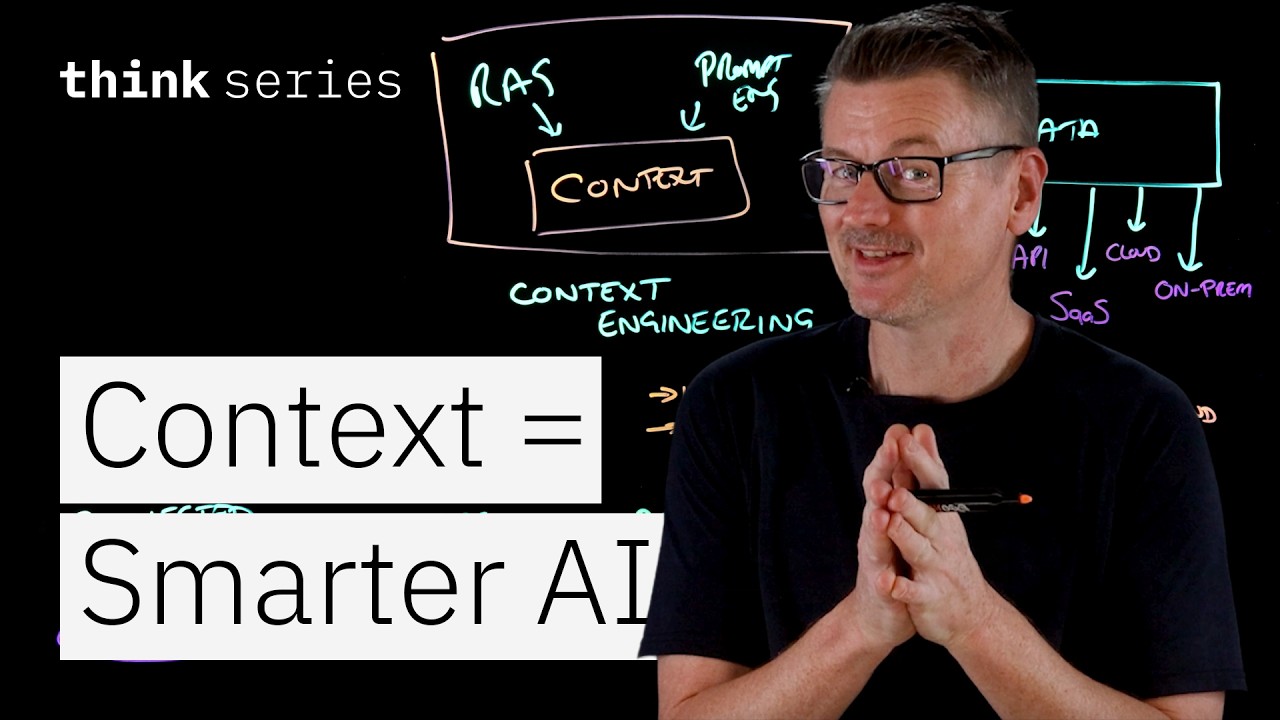
Beyond Simple RAG: How Context Engineering and GraphRAG Fix AI Performance
As Martin Keen from IBM explains, context is the single biggest bottleneck in getting AI to do what you want. While simple semantic search architectures helped us get started, building truly reliable, enterprise-grade AI systems requires shifting toward Context Engineering, Retrieval-Augmented Generation (RAG), and advanced GraphRAG models.
-

Blog Post: Moving Beyond Vector Databases with Vectorless RAG
In the rapidly evolving world of Large Language Models (LLMs), Retrieval-Augmented Generation (RAG) has become a standard for providing context to AI. Traditionally, this meant building complex pipelines involving document chunking, embedding generation, and management of vector databases. However, a new trend is emerging: Vectorless RAG.
-

AI Periodic Table Explained: Mapping LLMs, RAG & AI Agent Frameworks
The YouTube video “AI Periodic Table Explained: Mapping LLMs, RAG & AI Agent Frameworks” provides a visual, structured model — inspired by the chemical periodic table — to break down and categorize AI system components. This AI Periodic Table helps audiences decode complex generative AI architectures and understand how fundamental building blocks combine to create…
-

Gemini’s File Search API: Grounded AI Just Got Easy (and Cheap!)
The Gemini File Search API is a significant leap forward in making advanced AI accessible. It empowers developers to create more accurate, reliable, and intelligent applications faster and more affordably than ever before. If you’re looking to leverage the power of LLMs with your private data, this tool is an absolute must-explore.
-
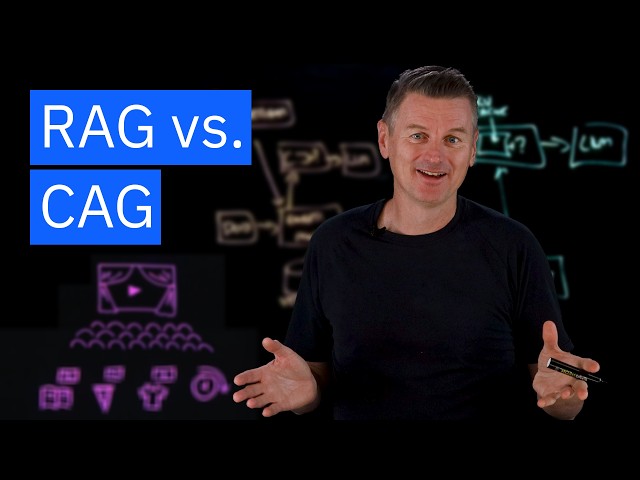
RAG vs. CAG: Solving Knowledge Gaps in AI Models
RAG vs. CAG: Solving Knowledge Gaps in AI Models Large language models face a fundamental knowledge problem – they can’t recall information that wasn’t in their training data, whether it’s recent news like Oscar winners or proprietary business data. Two powerful techniques have emerged to address this limitation: Retrieval-Augmented Generation (RAG) and Cache-Augmented Generation (CAG).…
-
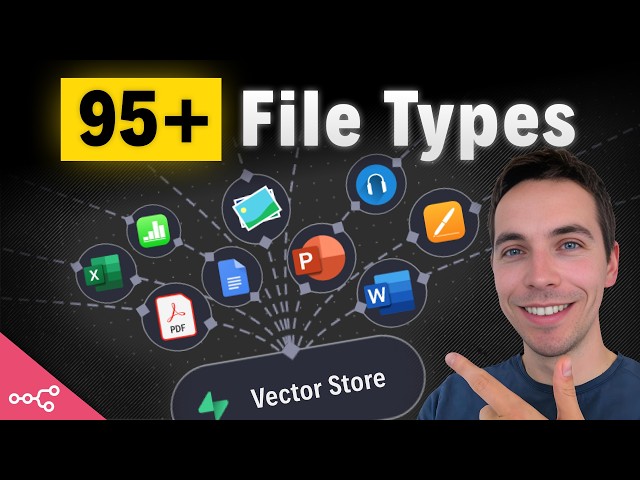
Import EVERYTHING Into Your RAG Agent with Docling & LlamaParse
Parsing is the first step in building a powerful RAG system. Without accurate, consistent document ingestion, even the most advanced AI agent will struggle. Tools like LlamaParse and Docling ensure that your RAG agent can handle real-world document workflows — securely, reliably, and at scale.
-
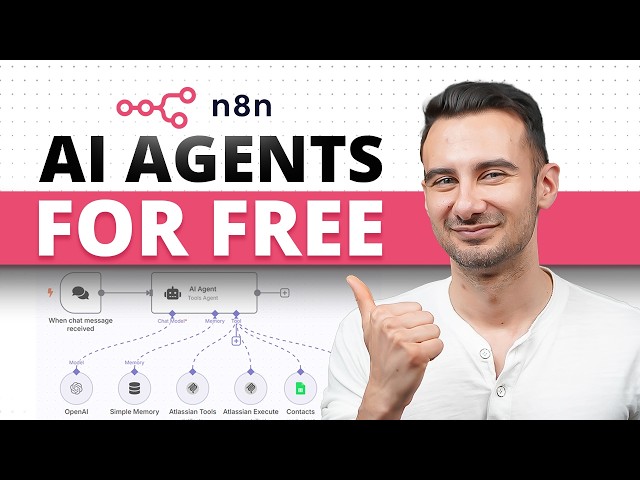
n8n Tutorial for Beginners – Build Your First Free AI Agent
Artificial Intelligence (AI) agents are no longer reserved for developers with advanced coding skills. With n8n, a powerful workflow automation tool, you can build your own AI agent without writing a single line of code. In Kevin Stratvert’s tutorial, we explore how to set up a free AI agent step by step using the Gemini…
-
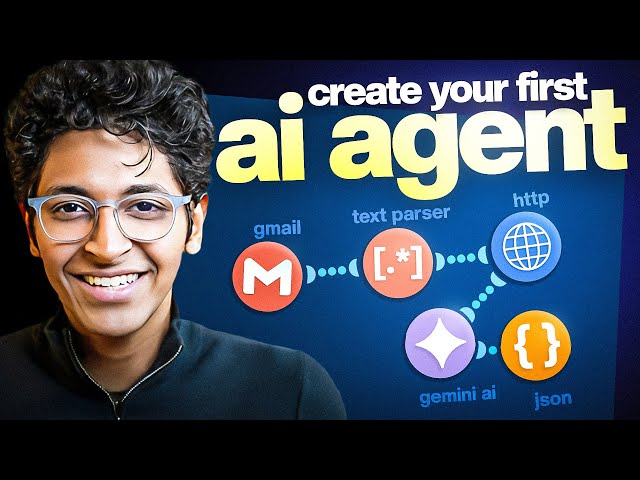
Build Your First AI Agent in 20 Minutes (No Coding Required)
Want to create an AI agent—something that can reason, act, and automate tasks—without writing a single line of code? This video tutorial walks you through exactly that. In just ~20 minutes, you’ll learn how to set up a working AI agent, connect tools, give it memory, and have it perform actions automatically.
-
Embedding Gemma – A Game-Changer for On-Device RAG
Retrieval-Augmented Generation (RAG) is a powerful technique for enhancing large language models (LLMs), but running it on-device has always been a challenge. Enter Google’s new Embedding Gemma model, a lightweight embedding model designed to make on-device RAG not only possible, but also easy and efficient.
-
Spec-Driven Development with GitHub’s SpecKit: The Future of AI-Powered Coding
SpecKit represents a big step forward in how AI coding workflows are structured. By turning intent into executable specifications, it bridges the gap between what developers want and what AI delivers. As AI coding agents evolve, spec-driven development will likely become a mainstream paradigm for software teams.
-
How AI Impacts Software Engineering Productivity: Insights from Research
AI is already a powerful assistant for software engineers—not a replacement. Used wisely, it can significantly enhance productivity while allowing human engineers to tackle more meaningful challenges. But it’s not a silver bullet. Complex systems, niche languages, and legacy codebases will still need skilled human judgment. In short: AI amplifies engineering—but doesn’t automate it away.
-
Game-Changing Technology Trends Shaping 2026
By 2026, artificial intelligence and emerging tech are on track to automate up to 70% of everyday tasks, fundamentally transforming how we live, work, and interact with machines. The following 17 trends are not just futuristic predictions—they’re already unfolding before our eyes.
-
Prompt Engineering, RAG, and Fine-Tuning Explained
Prompt Engineering, RAG, and Fine-Tuning each offer unique advantages and trade-offs. Whether you’re building content generators, chatbots, or specialized tools, choosing the right mix of these methods—and knowing when to pivot—will make your AI solutions smarter, more reliable, and more efficient.