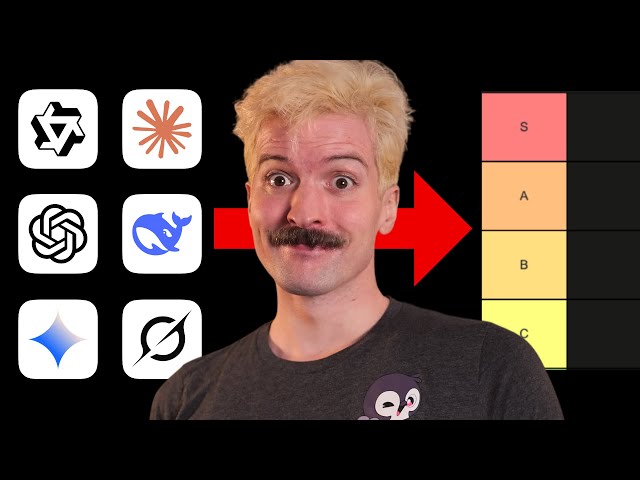
Introduction: In a recent video, Theo from t3.gg shares his insights and personal feelings about various AI models, drawing from his experience building a chat app that utilizes them. He ranks these models on a tier list, offering a candid look at their strengths, weaknesses, and overall performance. This blog post elaborates on Theo’s key observations, providing a deeper understanding of the current AI landscape.
Cost-Effectiveness Matters: Theo emphasizes the importance of cost-effectiveness, particularly for projects like his “cheap chat app” [00:25]. This highlights a crucial consideration for developers and businesses choosing AI models: balancing performance with budgetary constraints. While powerful models exist, their high cost might make them impractical for certain applications.
The Rise of 4.0 Mini and Deepseek R1: The video spotlights the impact of models like 4.0 Mini and Deepseek R1 in the AI landscape [05:30], [15:09]. These models seem to offer a compelling combination of capabilities and efficiency, making them noteworthy contenders in the competitive AI arena.
Gemini 2.0 Flash: A Top-Tier Favorite: Theo expresses a clear preference for Gemini 2.0 Flash, citing it as a top-tier model [06:06]. This suggests that Gemini 2.0 Flash excels in various aspects, making it a versatile and reliable choice for a wide range of tasks.
Models to Approach with Caution: On the other hand, Theo identifies models like QW and 01 as potentially less useful or overpriced [11:51], [09:17]. This underscores the importance of careful evaluation and testing before committing to specific AI models, as not all options deliver equal value.
The Need for Speed: Grock Chip Acceleration: The video touches upon the speed and performance of different models, with particular attention to those accelerated by Grock chips [13:58]. This highlights the ongoing advancements in hardware that are enabling faster and more efficient AI processing.
Claude Models: Powerful but Pricey: Theo praises Claude 3.5 for its coding abilities but critiques its high cost [21:18]. This illustrates a common trade-off in the AI world: exceptional performance often comes at a premium.
Transparency in Reasoning Data: The video also addresses the lack of transparency in reasoning data for some models, contrasting it with Anthropic’s approach [27:02]. This raises important ethical and practical considerations about the explainability and trustworthiness of AI systems.
Theo’s Personal Model Preferences: Ultimately, Theo reveals his personal preferences for model usage, favoring Gemini 2.0 Flash for most tasks, 03 Mini for harder problems, and Claude for CSS-related tasks [46:42]. This demonstrates how specific use cases can influence the choice of AI model.
Conclusion: Theo’s video provides valuable insights into the current state of AI models, based on real-world experience. His tier list and candid observations offer a practical guide for navigating the complex and rapidly evolving AI landscape. From cost-effectiveness and performance to transparency and specific use cases, his analysis highlights the key factors to consider when selecting the right AI model for a given task.
Leave a Reply