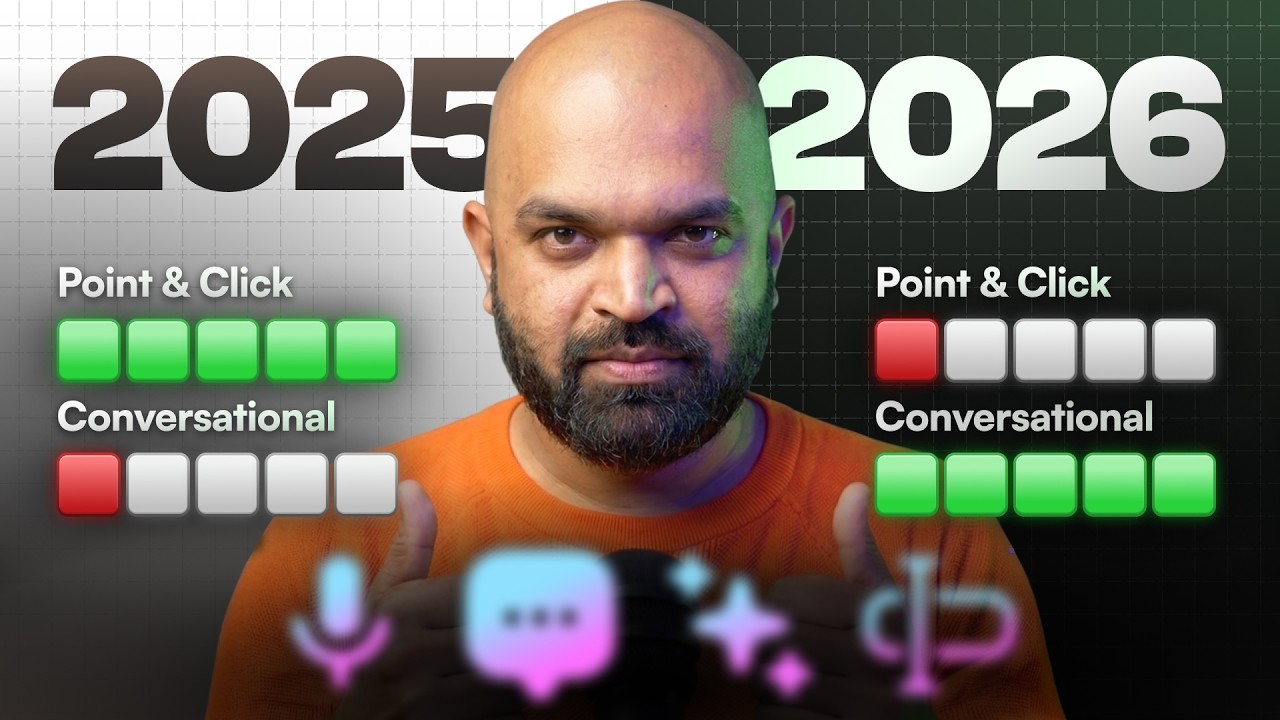
We are currently witnessing the death of “static” design. In 2026, the industry is shifting from building fixed screens to designing intelligent systems that adapt in real-time. While most people see AI as just a shortcut for making icons or layouts, the reality is a fundamental rewrite of how humans interact with technology.
Here is the breakdown of the massive shifts occurring right now.
1. The Death of the “Static” Wireframe
Traditional wireframing is becoming a bottleneck. In 2026, designers are moving away from grayscale boxes in Figma and toward “Vibe Coding”—generating functional, clickable prototypes directly from a PRD (Product Requirements Document) using tools like Lovable, Replit, or Bolt.
- Old Way: PRD → Wireframe → Static Screens → Weeks of review. (2–3 weeks)
- New Way: PRD → AI Flow Analysis → Functional Prototype → Real user testing. (2–3 days) [3.3]
2. From “Screens” to “Decision Orchestration”
Design is no longer about guiding a user through a series of buttons. It is about Agentic UX.
- Supervision over Execution: Users are moving from performing tasks to delegating goals to AI agents.
- The Handoff: The new core challenge for designers is defining the “handoff moments”—where the AI needs human approval and where it can act autonomously [2.2].
- Explainable UI: Since agents take actions in the background, the UI must now visually represent the AI’s reasoning, not just its output, to maintain user trust [3.2].
3. Generative & Intent-Based UI
We are entering the era of the Single-Use Interface. Instead of one dashboard that looks the same for everyone, AI models like Gemini 3 Flash can now generate custom, interactive components on the fly based on a specific user’s intent [3.2].
- Hyper-Personalization: The layout, content blocks, and even the navigation menu rearrange themselves based on your browsing history and current environment [4.4].
- Predictive UX: Systems now use “Predictive Usability Optimizers” to simulate billions of user interactions, catching friction points before a single real user even touches the product [4.3].
4. Multimodal & Ambient Design
The “Screen” is no longer the focal point. UX is becoming Ambient—happening around the user via voice, gaze, and gesture.
- Voice as a Transactional Layer: Voice isn’t replacing screens; it’s becoming the way we capture intent (e.g., “Log this meeting note”), while the screen remains for validation and complex review [2.2].
- Spatial UI: With the rise of XR (Extended Reality), designers are using volumetric principles—designing for depth and hand gestures rather than just clicks and scrolls [4.3].
5. The Evolution of the Designer’s Role
If you are just a “pixel-pusher,” your role is at risk. However, for strategic designers, the value is skyrocketing.
- The “Experience System” Governor: Designers are becoming curators who define the constraints and brand rules that the AI must follow when generating UI [4.3].
- Behavior Engineering: Success is now measured by Prompt Success Rate (PSR)—how effectively the design helps the user get the right result from the AI with the least friction [2.3].
Leave a Reply