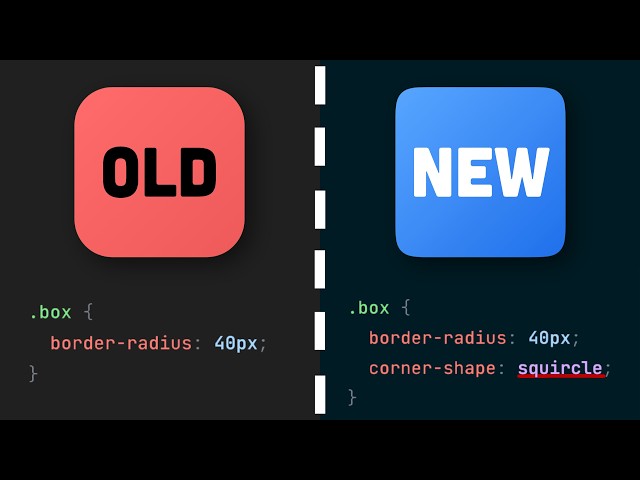
In the fast-moving world of front-end development, CSS is evolving faster than ever. What was once a simple styling language has grown into a highly expressive and capable language that now rivals bits of JavaScript in utility. For web developers aiming to stay ahead of the curve, it’s essential to understand the latest additions to CSS — especially those that are gaining traction in 2025 and will become mainstream by 2026.
In the video “10 NEW CSS Features You Need To Know For 2026”, the host breaks down modern CSS enhancements that can significantly improve workflow, performance, maintainability, and creativity. Let’s unpack the key takeaways so you can start planning how to leverage these features in your projects.
1. CSS Custom Functions
CSS custom functions let you write reusable logic directly within your stylesheets. Similar to JavaScript functions, they help eliminate repetitive code and create dynamic values based on input parameters.
Why it matters:
Prior to custom functions, developers often had to use pre-processors like Sass or resort to JavaScript for dynamic CSS logic. Now, core CSS can handle more expressive styling logic natively.
2. Conditional Rules in CSS
Conditional rules allow you to apply styles based on state, environment, or device specifics without JavaScript.
For example, you might write a rule that only applies when particular conditions are met — such as viewport width or user preferences — enabling more adaptive layouts. This reduces dependency on media queries alone.
3. Zero-JS Carousels
Traditional carousels often require JavaScript to handle transitions, looping, and accessibility. The new CSS features enable purely CSS-driven carousels that are lighter and often smoother.
Benefits:
- Faster load times
- Fewer scripts to maintain
- Better performance on low-powered devices
4. Scroll-Related Logic (Scroll-Linked Animations)
The emerging scroll-linked CSS properties let you trigger animations and style changes based on scrolling — all without JavaScript.
Use cases include:
- Parallax effects
- Reveals as users scroll
- Dynamic component animations
These features improve user experience while reducing reliance on scroll event listeners in script files.
5. Container Queries 2.0
Container queries are becoming more powerful and flexible. Instead of styling based on the viewport, you can now style components based on the size and shape of their parent container.
This enables truly modular design systems where components adapt autonomously to their layout context.
6. Cascade Layers
With larger stylesheets or multiple imported style sources, specificity wars become messy. Cascade layers let you define the order of styles in a structured way.
How it works:
- Layers can be declared explicitly
- Later layers override earlier ones predictably
- Lower specificity conflicts are resolved more elegantly
7. Advanced Color Features
The CSS Color Module Level 4 introduces new syntaxes like lab(), lch(), and wider gamut color spaces. These enable more accurate, richer colors and design systems that align closer with real-world color science.
8. Subgrid Enhancements
Grid layouts revolutionized CSS, and subgrids make them even stronger. With subgrid support, a child grid can inherit track sizes from a parent grid — especially useful for complex nested layouts.
This simplifies design logic and reduces redundant definitions.
9. Scroll Snap Improvements
Scroll snap now includes more refined controls, allowing developers to define seamless and intuitive scroll experiences without scripting.
Whether for carousels, sections, or full-page scrolls, this helps designers create interfaces that “feel right.”
10. View Transitions API (CSS-centric Usage)
While not a pure CSS feature, the evolving View Transitions API enables smoother transitions between states and pages with minimal script glue.
It pairs well with modern CSS properties, encouraging transitions that feel integrated rather than bolted-on.
Conclusion
The trajectory of CSS clearly trends toward greater expressive power, reduced dependency on JavaScript, and cleaner, more modular design paradigms. Whether you are building design systems for enterprise applications or crafting personal projects, understanding these features now will ensure your codebase remains forward-compatible and maintainable.
For developers preparing for 2026 and beyond, mastering these CSS advances will translate into better performance, more adaptable layouts, and fewer headaches during maintenance.
Leave a Reply